Jam Gadang Uncovered: Rare Facts and Technical Secrets Tourists Never Hear About
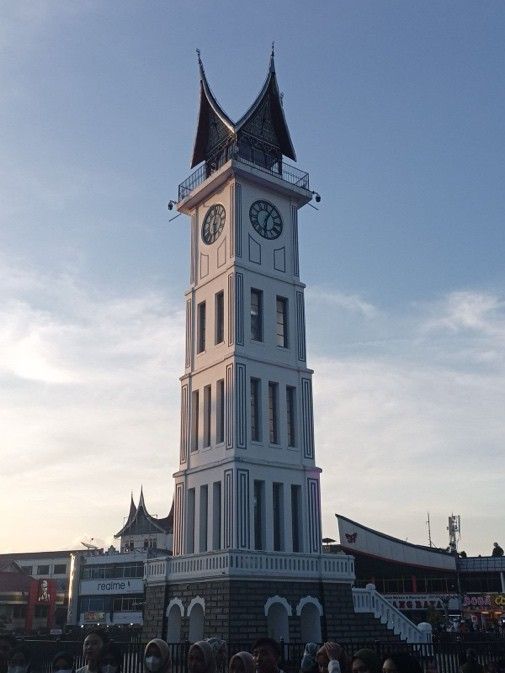
Today, Jam Gadang stands proudly at the heart of Bukittinggi as one of Indonesia’s most iconic landmarks, attracting thousands of visitors every year. More than just a clock tower, it has become a cultural symbol, a meeting point for locals, and a central highlight of the city’s tourism scene.
Surrounded by modern plazas, lively markets, and restored public spaces, Jam Gadang continues to blend its colonial-era heritage with the vibrant daily life of Bukittinggi—making it both a historical monument and a living part of the community.
But have you ever heard the other surprising facts behind Jam Gadang? Let’s take a look together! The Jam Gadang tower stands at the heart of Bukittinggi City, West Sumatra— right inside the Sabai Nan Aluih Park area, often known as the city square, and only a few steps away from Pasar Ateh (Benteng Pasar Atas).
Jam Gadang’s Original Architecture
The tower you see today features the traditional Minangkabau gonjong roof. But did you know that Jam Gadang actually went through three major architectural changes throughout its history? Let’s break them down!Jam Gadang, standing about 26 meters tall, was built in 1926 as a gift from the Dutch Queen to the city controller (controleur) of Bukittinggi. The tower was designed by Yazid Abidin, a Minangkabau architect, and constructed with the help of Sutan Gigi Ameh, a master builder from Aceh. One of the most fascinating details is its construction method—no iron or cement was used.
Instead, the builders relied on a traditional mixture of limestone, sand, and egg whites, which acted as a natural binder and gave the structure its remarkable durability
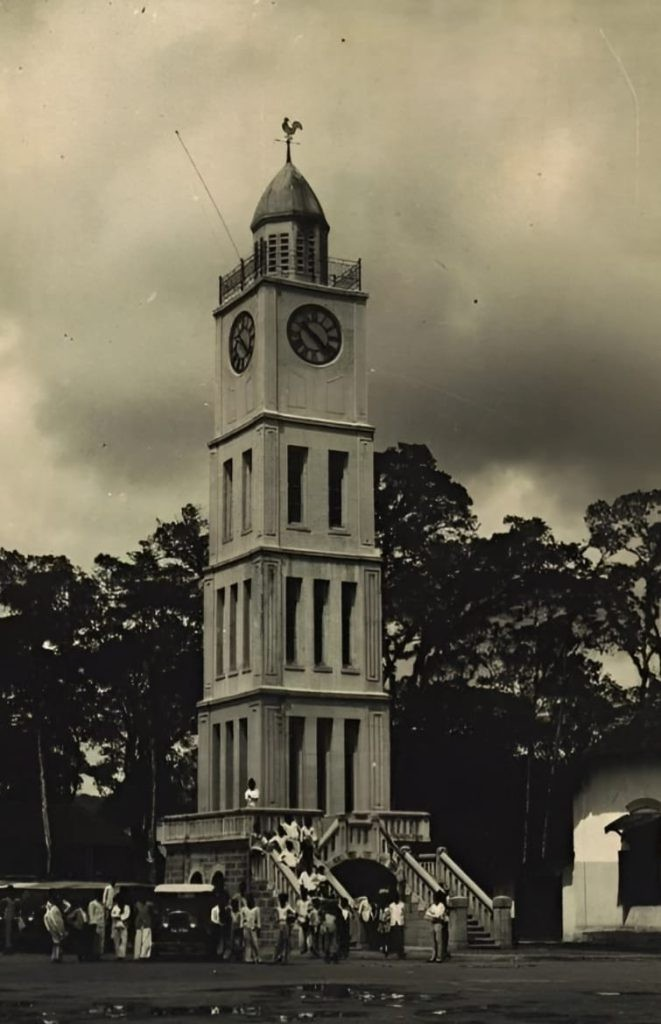
1.Dutch-style roof
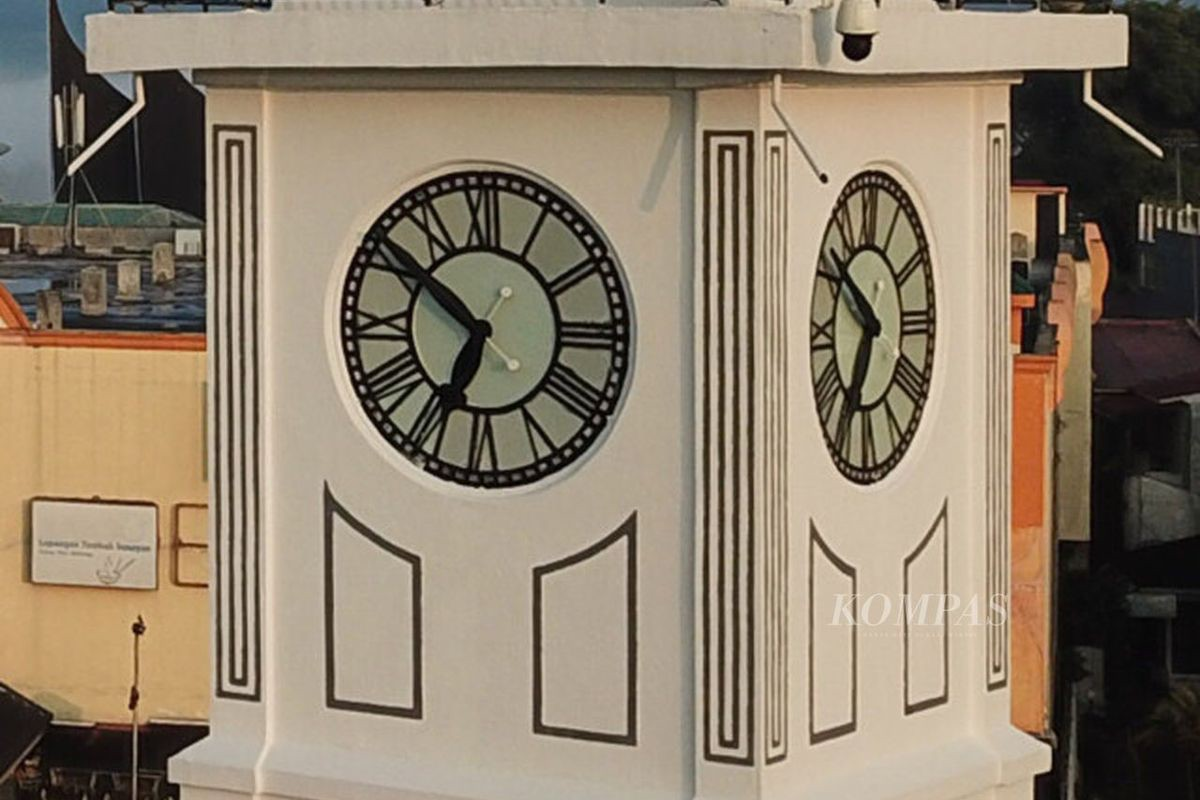
Jam Gadang originally featured a Dutch-style roof, with 80 cm clock faces powered by a Rotterdam-made mechanism and a bell marked Vortmann Recklinghausen from Germany.
2.Japanese - Pagoda-Style Roof
During the Japanese occupation, the roof was replaced with a pagoda-style design, reflecting Japanese architectural influence at the time.

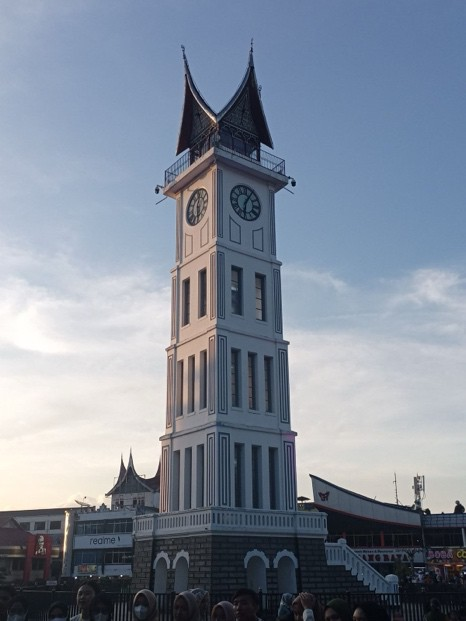
3.Indonesian-Minangkabau Gonjong Roof
After independence, the tower received its now-iconic Minangkabau gonjong roof, solidifying its identity as a symbol of local culture.
Jam Gadang is often compared to London’s Big Ben, not only because of its tower shape but also due to the rare clock mechanism inside it. Both landmarks are equipped with the Brixlion mechanical movement, crafted by Bernard Vortmann from Germany. Only two clocks with this mechanism still operate today—one in Bukittinggi and the other in London—making Jam Gadang an unusually valuable piece of horological history.
Another curious feature is the way the number four appears on the clock face. Instead of the usual Roman numeral “IV,” Jam Gadang uses “IIII,” a form built directly into its original mechanical system. The reason behind this choice remains unclear, but several ideas circulate. Some say “IIII” creates better visual balance across the clock’s four quadrants, a style common in older European tower clocks.
Others note that “IIII” reflects an earlier Roman-numeral tradition that survived into the colonial era. Another view suggests that the simpler form was chosen for easier reading by the local community at the time.
Studies on Jam Gadang’s structural reliability show that the tower was built with a robust system, surprisingly ahead of its time. The foundation uses a massive stone prism buried nearly 1.8 meters deep, which has shown no major settlement even after several large regional earthquakes. Its main structure consists of reinforced-concrete columns—tested to have a compressive strength of around 25 MPa—providing strong vertical and lateral stability.
In short, Jam Gadang remains resilient thanks to its deep stone foundation, reinforced concrete frame, and structural flexibility that allows controlled movement during seismic activity.